Teaching and Learning Consulting Network, LLC
Contact us
  • Home
  • About Us
  • Connect With Us
    • Costs
  • Professional Learning
    • 7 PL Standards
    • Adult Learners
    • Change Models
    • Leadership
  • Curriculum
    • Curriculum Design
  • Vicki's Blog

Vicki's Blog

My thoughts on education, improvement, and life itself.  Enjoy!

TLC Home

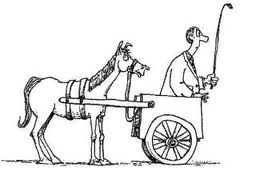
Professional Learning Standards:  Making Sure the Horse is Before the Cart

11/14/2012

1 Comment

 
Picture
Hmm.... I don't seem to be going anywhere
There's an old saying, "Don't get the cart before the horse."  Why would we ever do that?  But we do it more often than we'd like to admit.  We start taking action before we have all the facts; or we fail to lay the ground work of vision and clarity of purpose before we start; we get in a hurry or we don't really understand the value of the foundation.  And when those things happen, whatever it is we wanted to accomplish often flounders and fails to grow and develop as we had hoped.   We need to know the why and the how before the what can be put into place.  And then we need to look ahead and say "Now what?  So what?"  Getting that horse hooked up to the cart before we start is just the beginning of the journey, but it is an important first step.

Learning Forward (formerly known as the National Staff Development Council or NSDC) has developed  Standards for Professional Learning  for schools to use to help educators become better teachers, which will in turn improve student achievement.  If we put into practice these 7 Standards (which have been adopted by the Kansas State Board of Education to be used in all Kansas schools), then Common Core, or whatever else we want to put in place, will have a much better chance of succeeding.

What are these Standards of Professional Learning?  They are much like K-State Football Coach Bill Snyder's 16 Goals for Success that I talked about in a previous blog.  They give everyone common language and opportunity to understand the "how and the why" so that the "what" can be put into place.

These professional learning standards  address the following concepts and ideals: 
  1. Learning Communities (no more teaching or learning in isolation); 
  2. Leadership (that builds capacity and advocates and supports professional learning); 
  3. Resources (prioritizing and coordinating services); 
  4. Data (to drive teaching and learning);
  5. Learning Designs (research based strategies); 
  6. Implementation (transferring what teachers know to the students); and 
  7. Outcomes (goals and standards to strive for).  

If we stick to the plan, and believe in the direction that it takes us, then these standards can help us with our vision, our designs, our instruction and our results.  If we fail to effectively utilize even one of these 7 standards, then we will fall short.  These standards are important individually, but are most effective if viewed as part of a specific process whereby we look at, discuss, review, and revise all aspects of the education we provide for our teachers and students.  

It is important that all stakeholders understand what each standard entails and the importance of the 7 standards collectively.  School Boards and administrators make decisions everyday that impact the kind and quality of professional learning in schools when creating the school calendar, allocating funds, negotiating with teachers, and by communicating to the public what is going on in their school in terms of teaching and learning.  Teachers need to understand the importance of professional learning and move away from the idea of "in-service" where they typically find themselves disinterested and/or disconnected because they somehow fail to understand the importance of the connection between growing in knowledge and skills,  reflecting on one's own practice, and student learning.  

As educators, we are life long learners, or at least we should be.  The old idea of "in-service" or "professional development" implies that the topics discussed on those days were done "to us" or "for us" rather than "with us."  Professional Learning involves much more than sit and get or one and done.  It involves taking new or different information, ideas, or strategies and determine ways to effectively use the new knowledge or skills in a way that makes us better teachers and helps us produce higher achieving students.  It requires collaboration and support.  By transferring what we learn to the classroom,  the 7 Standards of Professional Learning help us make that connection between knowing and doing by providing a framework and process to ensure regular reflection and revision.

We need to know that what we are learning, why we are learning it, and if our  implementation of that learning in the classroom is making a difference.  We need to help each other by supporting our efforts to improve instruction and student learning.  Regular examination of practice and results will lead us to revisions that fine tune the process and ultimately improve the outcome.  Let's get that horse hooked up and see where it takes us!

Picture
1 Comment

Free to Teach, to Learn, to Choose:  Thank a Veteran

11/11/2012

1 Comment

 
Picture
There's a bumper sticker out there on many cars that says, "If you can read this, thank a teacher."  To expand on that concept, if you enjoy the freedom to learn, to teach, to have your own opinion, and to choose how you want to live, thank a veteran.

When a person enlists in the military, they choose to defend the freedoms that this country stands for at great personal sacrifice.  They willingly give of their time, efforts, and talents, understanding that they may also give up their own lives.  We should also thank their families for sharing their loved one with us, and for making sacrifices so their soldier could serve.  We are indeed fortunate to be blessed by brave and selfless individuals in the name of freedom.

Teachers don't teach for the money.  They teach to make a difference in the lives of their students.  In the same vein, soldiers don't serve to become rich and famous, they serve out of love for country and the desire to serve and protect the people who live in it.  Saying "thank you" and honoring their service is the least we can do.  As a teacher, there is no greater feeling than to have a current or former student tell you how much they appreciate what you did for them.  And our service men and women are no different.  They too, need to know that we, the citizens of this great country, appreciate their efforts on our behalf.

Some of my favorite memories of trips to Washington, DC, are to the memorials of Korea, Vietnam and WWII, and to Arlington National Cemetery.   To see an elderly man, led by a family member, survey the reflecting pool, or someone scratching the image of the name of a fallen soldier onto a piece of paper, or the solemness of the guards of the Tomb of the Unknown Soldier, I am humbled by the sacrifice that our veterans have made for me and this great country we live in. 

I personally want to say thank you  to the teachers that taught me how to read and love learning, and to the veterans and current service men and women whose love of America allowed me those learning opportunities.  

1 Comment

It's Time to Be Thankful

11/1/2012

2 Comments

 
November.  The month of Thanksgiving... which should be more to us than a few days off from work or school.  After reading a Facebook post from a former student today where she posted the first of 30 days of what she is thankful for, it made me think about what I am thankful for personally, and all that we in education should be thankful for too.  As much as we recognize the many challenges that face us in education with too little time, tight budgets, federal, state and local mandates, difficult students, testy administrators, and uncooperative colleagues, we have so much for which we can and should be thankful.

There are 30 days in the month of November.  So I challenge you to think of 30 ways you are thankful about your chosen profession.  Here are 10 that I came up with, in no particular order of importance, to get us started.  I'm know there are many, many more.  You may agree, or not... but each is worth considering...

1.  The people.  I think one of the major reasons I teach is the people.... the colleagues, the students, the classified staff, parents, and all those with whom you have a meaningful relationship.  I have cherished friendships with fellow teachers and co-workers; and former students, who now as adults, still call me "coach" or "Mrs. Bechard" out of respect; and parents who still stay in touch and make me feel like I made a difference in their children's lives.  There are also those who touched my life through their influence, support, and encouragement.  I think of Gene Dillard, my favorite teacher who challenged and pushed me as a student, and then mentored me as my principal.  I think of Lew Faust who gave me a reason to stay in education when I was disillusioned, and Bob Behrens who allowed me the opportunities to grow in leadership roles.  And I would be remiss without mentioning my many teacher friends and consultant colleagues with whom I am intertwined and totally dependent on their love, support. knowledge, and feedback.

2.  Professional learning.  The opportunity to keep growing and learning and to stay current on things that matter, and then be able to share that new learning with others.  Just as with your physical abilities, your mental abilities follow this mantra too:  "If you don't use it, you lose it!"

3.  School Lunch.  It was not always the greatest, but man, there were some amazing choices on the menu that I looked forward to each month!  They were probably not the healthy choices I should have been making, but they sure were good - and best of all, you got to eat them with your friends whether you were the students in the cafeteria, or the teachers in the faculty room. 

4.  Binder clips.  You laugh, but these are the greatest little tools for holding what matters together with a tight grip!

5. Colored file folders and paper.  In a sea of white paper, everything is the same and often unrecognizable.  But color gives it identity and a way to find what was lost whether it is on my messy desk, or when giving it to students or sending it home for parents.  Color gets noticed!  People are like that too!  When we add color to what we do, we too get noticed!  It's easy to be safe but it may not get you where you want to go as quickly!

6.  Technology.  This is the greatest change that has occurred in my lifetime.  In education (and in all walks of life) we can look up more; write more; organize more easily; edit without having to start over; and do everything so much faster!  We no longer have to learn to thread projectors or use reference books that are outdated the moment they go to print.  The technology makes learning and teaching more interesting and even more fun!  I have become dependent on technology, and I have only scratched the surface of what's out there!  I will acknowledge it can also be irritating when it doesn't work, but it's a lifesaver when it does work!

7.  School facilities.  No matter how many things you can see that need to be fixed in your building, be thankful you have one!  Make it as nice and inviting as you can!  Be thankful it's not a bombed out shell, or abandoned because everyone moved away. It is the place we bring learning to life!  Make it special!

8.  Activities/Athletics.  Yes these are important parts of schools.  They are the motivation for some, the extension for others, and the way we become well rounded.  We learn team work, problem solving, perseverance, goal setting and achievement in these settings.  We learn how to be there for others and to work hard to achieve our goals.  We learn application of learning and how to perform under pressure.  We understand the strength of unity and the weakness of a single link.  These are lifetime experiences that we take with us forever.

9.  Getting out of your building.  It's a pain to do lesson plans or clean up the messes left by your absence, but it is sooooo important to see what else is out there!  Getting out of your building gives you opportunities to learn something new, connect with other educators, see how others do the same thing you are attempting to do, or evaluate your own effectiveness.  It is a time of renewal of spirit and skill.  It is also a time to give back, to help others, and to share experiences.  We are not an island unto ourselves.  The more we reach out, the more we get in return.  Get out of your classroom; get out of your building; get out of your district; and once in awhile, get out of your state.  There is a lot to see and learn out there!

10.  Educational Freedom.  We have choices.  As teachers we can choose from many resources and teaching strategies to teach the curriculum.  Even our curriculum, such as the Common Core Standards, give us latitude on how to teach while giving us guidance on the depth of what we teach.   Thankfully, our government does not decide for us what our educational path will be based on how we are functioning at age 14 (or sooner).  There are many pressures to succeed and requirements we must meet, but students have choices on course work and careers, teachers have choices on what and how to teach, and schools have choices on what to offer.  We are free to complain, to protest, to disagree.  We are also free to do something about it.  Education is not just about learning stuff, it's learning what to do and when to do it with all the stuff we learn.

This is just the tip of the iceberg.  You probably can think of many, many things to be thankful for as an educator or as a non-educator who has benefited from school!  So everyday this month, think about something you are thankful for. What would you do if that thing, person, or opportunity wasn't there?  And when you realize that, you have been thankful!

2 Comments

    Author

    Vicki Bechard, 
    Owner and Lead Consultant

    I express myself best when I write, even though most who know me think I talk quite a bit!  

    I'm an educator first and foremost whether my students are kids, teachers, or my own children and grandchildren.  

    Archives

    August 2017
    July 2017
    March 2017
    December 2016
    September 2016
    August 2016
    April 2016
    February 2016
    January 2016
    November 2015
    September 2015
    August 2015
    July 2015
    May 2015
    April 2015
    March 2015
    February 2015
    January 2015
    October 2014
    September 2014
    August 2014
    July 2014
    June 2014
    May 2014
    April 2014
    March 2014
    February 2014
    January 2014
    April 2013
    March 2013
    January 2013
    December 2012
    November 2012
    October 2012
    September 2012
    August 2012

    Categories

    All
    Action
    Anniversary
    Anticipation
    Attitude
    Beginnings
    Be Present
    Blessings
    Bloom
    Bridges
    Change
    Circumstances
    Common Core
    Curriculum Planning
    Doing
    Endings
    Expectations
    Failure
    Fear
    Fight Or Flight
    #ForeverRoyal
    Foundation
    Friendship
    Fun
    Graduation
    Headlines
    Healthy
    Joy
    Kansans Can
    Kansas
    Kinda
    Kindness
    #ksleg
    K State
    K-State
    Leadership
    Lean In
    Life
    Make A Difference
    Memories
    Mom
    Moments
    NCAA Basketball
    Nurses
    Optimism
    Persevere
    Pets
    Photographs
    Play
    Positive Intent
    Prairie Burning
    Pro Bowl
    Productive Struggles
    Professional Learning
    Purpose
    Reflection
    Relationships
    Relevance
    Resiliency
    Resolutions
    Respect
    Response
    Rigor
    Royals
    School Improvement
    School Shooting
    Sorta
    Spring
    Success
    Surviving
    Taken For Granted
    Teachers
    Teamwork
    Thankful
    The Dash
    Understanding By Design
    Weddings
    Why
    Winter
    World Series

    RSS Feed

Contact us at [email protected]
20064 K-92 Hwy, McLouth, KS  66054
913-796-6241